Every home cook dreams of achieving perfectly uniform slices, whether it’s for an elegant potato gratin, delicate cucumber salads, or crispy homemade vegetable chips. While a sharp chef’s knife is a fundamental tool, reaching that level of consistent precision by hand can be a lifelong endeavor. This is where the Mandoline Slicer Adjustable Thickness feature steps in, transforming tedious prep work into an effortless and enjoyable task. For “Thế Giới Mandoline”, understanding this pivotal feature is key to elevating your kitchen experience and culinary creations.
Beyond the Blade: What is a Mandoline Slicer?
A mandoline slicer is a kitchen tool designed to create consistent, even slices of fruits and vegetables quickly and efficiently. At its core, it features a flat surface with a sharp blade, allowing you to glide food across it for rapid, uniform cutting. While the basic concept has existed for centuries, modern mandolines have evolved significantly, offering a range of designs to suit various needs.
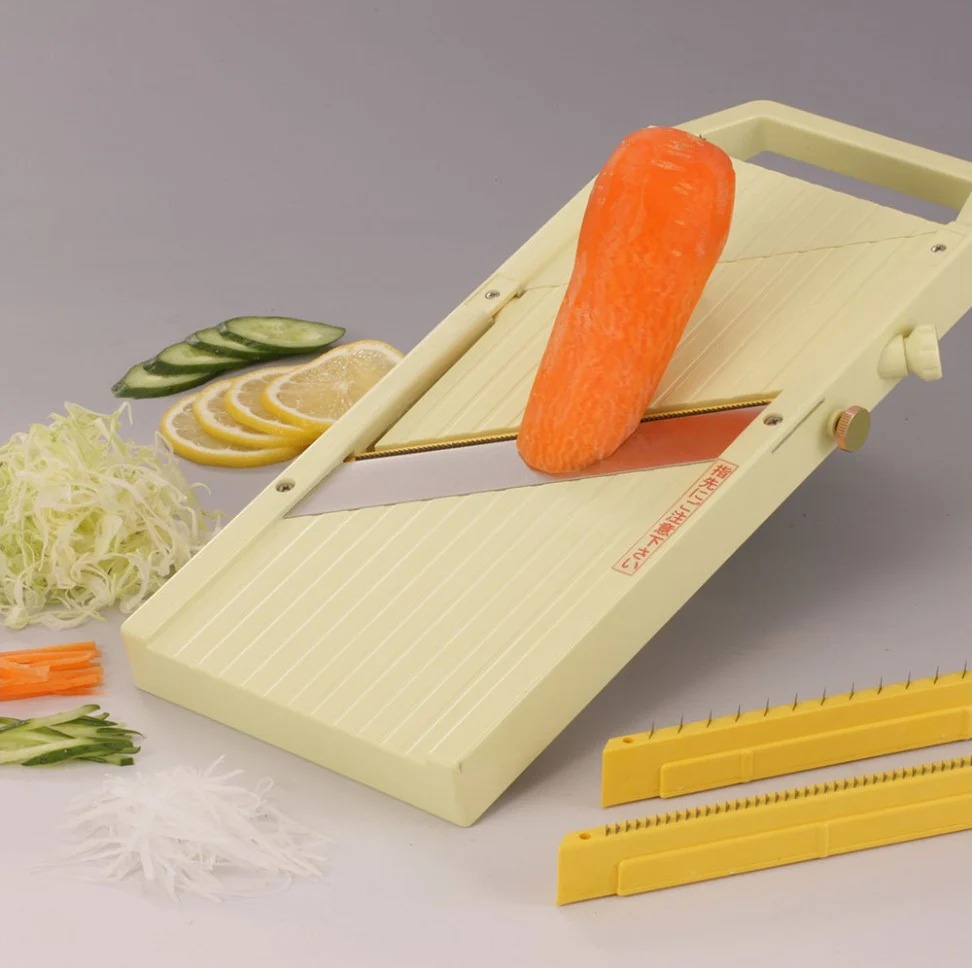
You’ll find several types: classic French mandolines, often all-stainless steel and known for their robust build; Japanese mandolines, typically lighter with incredibly sharp, non-removable blades; V-blade models, which handle soft fruits and vegetables with less tearing; and even enclosed, guillotine-style slicers that push food through a hidden blade for enhanced safety. Each type brings its own strengths, but the common thread is the promise of precise cuts.
Num
Product
Action
1
Gramercy Adjustable Mandoline Food Slicer, Mandoline Slicer for Kitchen, Mandolin, Potato, Tomato, Carrot, Vegetable, Fruit and Onion Cutter - Stainless Steel - INCLUDING 1 Pair Cut-Resistant Gloves

2
VEKAYA Mandoline Slicer, Mandoline Slicer for Kitchen, Adjustable Mandolin, Stainless Steel Mandoline, Vegetable Slicer, Potato, Onion, Cucumber, Tomato, Veggie Slicer with Cut-Resistant Gloves
3
Mandoline Food Slicer, Adjustable Mandoline Slicer for Kitchen, Stainless Steel Mandolin Vegetable Chopper for Potato/Tomato/Onion, Vegetable Slicer Julienne Cutter with Cut-Resistant Gloves
4
Cambom Mandoline Slicer Vegetable Slicer With 2 L Container for Potatoes, Tomatoes, Cucumbers, Carrots With 10 Blades White
5
Mueller Pro-Series All-in-One, 12 Blade Mandoline Slicer for Kitchen, Food Chopper, Vegetable Slicer and Spiralizer, Cutter, Dicer, Grater, Kitchen Gadgets Sets with Container, White Sand/Gray
6
Ourokhome Safe Mandoline Vegetable Slicer with Guard, 6-Blade Adjustable Kitchen Slicer with Container for Cucumber, Potato Chips & Salad Prep(Gray)
7
OXO Good Grips Handheld Mandoline Slicer for Kitchen, Adjustable Vegetable Slicer
8
Mandoline Slicer,Mandoline Food Slicer for Kitchen,Mandolin,Vegetable Chopper,Vegtable Slicer,Adjustable Stainless Steel Veggie Onion Tomato Julienne Cutter with Cut-1 Pair Cut-Resistant Gloves
9
Fullstar Mandoline Slicer for Kitchen, Fruit Cutter, Cheese Grater, Cucumber Slicer, Veggie Spiralizer, Food Cutter & Kitchen Gadgets & Gifts with Safety Glove (6 in 1, White)
10
2 Pack 5 in 1 Mandoline Slicer for Kitchen, Vegetable Slicer Multi Blade Potato Chip, Veggie shredder, Vegetable Cutter, Julienne Shredder and peeler For Small Job In Kitchen
The Heart of Precision: Unpacking Adjustable Thickness
The true magic of a modern mandoline lies in its adjustable thickness setting. This isn’t just a nice-to-have; it’s a game-changer for versatility and control in the kitchen. Imagine needing paper-thin radish slices for a delicate garnish one moment, and thick-cut potato rounds for a hearty gratin the next. A mandoline with adjustable thickness makes these transitions seamless, all with the turn of a dial or the slide of a lever.
How does it work? Most adjustable mandolines feature a mechanism, often a prominent dial on the side or bottom, that raises or lowers the cutting platform relative to the stationary blade. By adjusting this, you can precisely control the distance the food travels before hitting the blade, thus determining the slice’s thickness. Some models offer distinct, clearly marked preset thickness settings (e.g., 1mm, 2.5mm, 4mm), while others provide a more fluid, “infinite” adjustment within a specified range, often from ultra-thin (as fine as 0.1mm) up to substantial cuts (around 8-9.5mm or even 1/2 inch). This fine-tuning capability is what truly sets these tools apart, ensuring every ingredient is prepared exactly how you envision it. As Chef Antoine Dubois, a renowned culinary instructor, often advises, “The ability to dial in your slice thickness is not just a convenience; it’s the foundation for culinary consistency and achieving professional-level results at home.”
Essential Components: More Than Just a Blade
While the blade is undeniably the star, a mandoline slicer’s effectiveness and safety depend on several other crucial components working in harmony.
- Sharp Blades: Beyond the primary straight slicing blade, many mandolines come equipped with interchangeable blades or integrated mechanisms for creating various cuts. These include julienne blades for perfect matchsticks, and wavy or crinkle blades for decorative appeal. High-carbon stainless steel is common for its sharpness and durability, while ceramic blades are prized for retaining their edge longer and resisting rust.
- The Crucial Handguard and Food Holder: This is perhaps the most vital safety feature. A handguard, or food holder, is designed to grip your ingredient securely while keeping your fingers well away from the dangerously sharp blade. Good handguards are generously sized and offer a stable grip. Without it, a mandoline can be a serious hazard.
- Stable Feet/Kickstands and Non-Slip Bases: For safe operation, a mandoline must be rock-steady on your countertop. Most models feature robust, foldable kickstands and rubberized, non-slip feet or suction cups to prevent any unwanted movement during use. This stability is non-negotiable for preventing accidents.
- Collection Containers: Many mandolines integrate a food catch container directly beneath the blade. This not only keeps your workspace tidy but also makes for easy transfer of sliced ingredients to your bowl or pan.
Slice with Confidence: Safe and Effective Mandoline Use
Using a mandoline slicer, especially one with adjustable thickness, can feel intimidating at first due to its sharp blades. However, with proper technique and unwavering adherence to safety protocols, it becomes one of your most efficient kitchen allies.
Preparation Steps
- Wash and Peel: Always start with clean, well-prepped produce. Peel vegetables if desired, just as you would for knife cutting.
- Size Matters: Larger fruits and vegetables may need to be cut down into more manageable pieces that fit comfortably within the handguard. For round items like potatoes or beets, create a flat edge by slicing a small portion off with a knife; this provides a stable base in the handguard.
- Set Up for Stability: Extend the mandoline’s kickstand (if applicable) and place it on a dry, sturdy surface. A non-slip mat or damp cloth underneath can provide extra grip. Ensure the mandoline is positioned perpendicular to your body for optimal control.
Techniques for Different Ingredients
- Firm Foods (Potatoes, Carrots, Cucumbers): These are ideal for mandolines. Attach the food securely to the handguard and apply consistent, gentle pressure as you glide it across the blade in a steady forward motion.
- Softer Foods (Tomatoes, Bell Peppers): These can be trickier. Some models with V-blades or serrated blades handle them better. For very soft tomatoes, a gentle “shimmying” or sawing motion with less downward pressure can help maintain their integrity. Starting with a flat edge is crucial for stability.
- Achieving Your Desired Thickness: Before you start slicing your main ingredient, do a test slice or two. Adjust the thickness dial or lever until you get the perfect cut. This saves you from re-cutting an entire batch.
Safety First: The Golden Rules
“When using a mandoline, safety is paramount,” Chef Dubois emphasizes. “Never compromise on the handguard.”
- Always Use the Handguard: This is non-negotiable. No matter how small the remaining piece of food, or how confident you feel, always use the provided handguard or food holder to protect your fingers.
- Consider Cut-Resistant Gloves: For an extra layer of protection, especially when you’re new to using a mandoline or if your handguard feels flimsy, a cut-resistant glove is a wise investment. It provides peace of mind and significantly reduces the risk of injury.
- Maintain a Stable Position: Ensure both the mandoline and your body are stable. Avoid rushing.
- Proper Posture: Keep your non-dominant hand firmly on the mandoline’s base or handle, and your dominant hand on the handguard, guiding the food.
- Be Mindful of Dull Blades: Counter-intuitively, dull blades are more dangerous than sharp ones. They require more force, increasing the risk of slips and accidents. While mandoline blades often can’t be resharpened like a knife, maintaining the blade (as discussed below) is important.
Culinary Canvas: Creative Cuts and Applications
The mandoline slicer adjustable thickness feature unlocks a world of creative culinary possibilities, allowing you to achieve a variety of cuts that are difficult and time-consuming with a knife.
- Paper-Thin Slices: Set your mandoline to its thinnest setting (often 0.1-1mm) for delicate cucumber ribbons, translucent radish slices for salads, carpaccio, or crispy apple chips. These fine cuts cook incredibly fast and offer an elegant presentation.
- Julienne for Strips and Matchsticks: Engage the julienne blades and adjust the thickness to create uniform vegetable sticks. Think perfect carrot matchsticks for spring rolls, potato sticks for shoestring fries, or crisp bell pepper strips for stir-fries.
- Waffle and Crinkle Cuts: Many mandolines come with wavy blades, often with adjustable thickness settings. By slicing, rotating the food 90 degrees, and slicing again, you can create impressive waffle-cut fries, decorative crinkle-cut carrots, or uniquely textured potato chips.
- Dicing Techniques: For some advanced mandolines, especially those with hidden blades, you can achieve a dice. This usually involves slicing the vegetable into even slabs, then engaging internal blades or rotating the food strategically to cut strips, and then small cubes.
- Meal Ideas:
- Salads: Beautifully uniform lettuce, cucumber, and onion slices.
- Gratins & Bakes: Evenly thick potato, zucchini, or sweet potato rounds for consistent cooking.
- Fries: Homemade French fries, sweet potato fries, or even waffle fries.
- Pickles: Perfect, consistent pickle slices every time.
- Garnishes: Delicate citrus slices, ginger slivers, or herb curls to elevate any dish.
Why Every Kitchen Needs One: The Benefits Unveiled
Investing in a mandoline slicer with adjustable thickness brings a host of advantages to your kitchen, making cooking more enjoyable and your results more impressive.
- Unmatched Consistency and Presentation: This is arguably the biggest benefit. Every slice, from paper-thin to robust, will be uniform. This consistency is crucial for even cooking and creates a visually appealing dish that looks like it came from a professional kitchen.
- Significant Time Savings: Preparing large quantities of vegetables can be a chore. A mandoline dramatically cuts down prep time, allowing you to slice through a bag of potatoes or a pile of onions in minutes, not tedious half-hours.
- Elevated Culinary Results: Consistent thickness means consistent cooking. No more burnt thin edges while the centers are still raw. Your dishes will cook evenly, leading to better textures and flavors.
- Versatility for Diverse Recipes: From everyday meal prep to elaborate dinner parties, an adjustable mandoline expands your culinary repertoire, allowing you to experiment with new textures and presentations.
Keeping It Sharp: Maintenance and Longevity
To ensure your mandoline slicer remains a reliable workhorse for years to come, proper maintenance and cleaning are essential.
- Cleaning Tips:
- Dishwasher vs. Hand Washing: While some models are dishwasher safe, many manufacturers recommend hand washing, especially for the main unit with its fixed blade.
- The Cleaning Brush: Most mandolines come with a small cleaning brush. Use this to dislodge any trapped food particles from the blades and crevices.
- Safety First (Again!): When hand washing, exercise extreme caution. Never wipe directly across the blade with a sponge or cloth. Rinse thoroughly under running water, letting the water flush away debris.
- Blade Care: For removable blades, wash them carefully and dry them immediately to prevent rust, especially with stainless steel.
- Blade Care and Storage: Many mandolines come with dedicated storage caddies or covers for their interchangeable blades, keeping them sharp and safely tucked away. For mandolines with integrated blades, ensure the thickness setting is on its “safe” or “locked” position to retract the blade and prevent accidental cuts during storage.
- Tips for Extending Product Life: Avoid abrasive cleaners or harsh scrubbing pads that can scratch plastic components or dull blades. Store your mandoline in a safe place where it won’t be jostled or have heavy items placed on top of it.
FAQs about Adjustable Mandoline Slicers
How thin can a mandoline slicer cut?
Many advanced mandoline slicers with adjustable thickness can achieve incredibly thin cuts, often as fine as 0.1mm to 1mm, perfect for delicate garnishes or translucent vegetable chips.
Are mandoline slicers truly safe?
Mandoline slicers are safe when used correctly and with proper precautions. Always use the provided handguard, and consider wearing a cut-resistant glove for added protection. Stability on the countertop is also crucial to prevent accidents.
Can I use a mandoline slicer for soft foods like tomatoes?
Yes, many mandoline slicers can handle soft foods like tomatoes, especially V-blade models or those with exceptionally sharp blades. For best results, use a very gentle hand and ensure the tomato has a flat, stable surface for cutting.
What’s the difference between V-blade and straight blade mandolines?
V-blade mandolines feature a blade set in a “V” shape, which can make it easier to cut through tougher or softer-skinned foods with less resistance and tearing. Straight blade mandolines have a single, flat blade.
How do I clean my mandoline slicer safely?
Most mandolines can be rinsed under running water, using a small brush (often included) to dislodge food from the blade. Avoid wiping directly across the blade with your hands or a sponge. Some models are also dishwasher safe.
Can mandoline blades be sharpened?
Generally, the blades on most mandoline slicers are not designed to be sharpened by the user. If a blade becomes dull, it typically means it’s time to replace the mandoline or, for some high-end models, replace the specific blade insert. However, some traditional Japanese mandolines, like the Benriner BN-1, have removable blades that can be re-sharpened.
Conclusion
The mandoline slicer with adjustable thickness is more than just a kitchen gadget; it’s an indispensable tool for anyone who values precision, efficiency, and professional presentation in their cooking. From novice home cooks to seasoned chefs, this feature empowers you to create perfectly uniform cuts for any recipe, saving you time and elevating your culinary results. By embracing its capabilities and always prioritizing safety, you’ll unlock a new level of confidence and creativity in your kitchen. So, take the plunge, experiment with different thicknesses and cuts, and transform your everyday meals into visually stunning and perfectly cooked masterpieces. Your journey to mastering the slice starts now!