The aroma of freshly sliced potatoes, whether destined for a crispy gratin, golden fries, or delicate chips, is enough to get any home cook excited. But achieving those perfectly uniform cuts can be a challenge with a standard knife. This is where the Mandoline Potato Slicer steps in, transforming your kitchen prep and elevating your dishes to a professional level. As your trusted guide for all things Mandoline Slicer, “Thế Giới Mandoline” is here to help you navigate this indispensable tool, ensuring you make informed decisions and optimize your culinary adventures.
What is a Mandoline Potato Slicer?
At its heart, a mandoline potato slicer is a kitchen utensil designed to provide consistent, precise cuts of food with remarkable speed. Imagine a stationary, super-sharp blade over which you slide ingredients, yielding slices that are virtually identical every time. This tool typically features a flat platform, a razor-sharp blade (or multiple interchangeable blades), and an adjustable mechanism to control the thickness of your cuts. While historically a staple in professional kitchens, its benefits have made it a beloved gadget for home cooks seeking efficiency and culinary finesse.
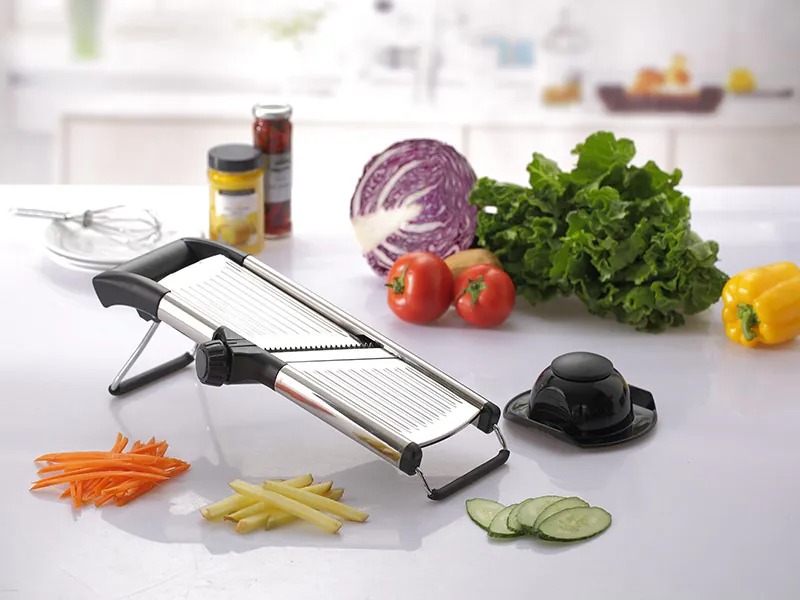
You’ll encounter a few main types of mandoline slicers. Some are handheld, designed to rest over a bowl or be held at an angle against a cutting board, offering portability and ease of storage. Others are kickstand models, featuring built-in folding legs that prop the device up on your countertop, providing greater stability for larger tasks. Then there are innovative guillotine-style mandolines, like the Dash Safe Slice, which offer an enclosed cutting mechanism, keeping your fingers entirely away from the blade for maximum safety.
The blades themselves also vary. Straight blades are excellent for firm vegetables like potatoes, delivering clean, even cuts. V-blades, on the other hand, are often preferred for their reduced drag, making them adept at slicing both firm and softer produce like tomatoes. Many mandolines come with additional attachments for different cutting styles, transforming your potato into julienne strips, crinkle-cut shapes, or even perfect cubes. The primary advantages of a mandoline potato slicer are clear: it saves you significant time, ensures uniform slice thickness for even cooking, and dramatically enhances the aesthetic appeal of your dishes.
Essential Features of a High-Quality Mandoline Potato Slicer
Choosing the right mandoline potato slicer is crucial for both performance and safety. Here’s what to look for:
Adjustable Thickness Settings
A top-tier mandoline will offer a wide range of thickness options, from paper-thin slices (think homemade potato chips or delicate gratins) to thicker cuts (perfect for robust French fries or a substantial potato pavé). Look for clearly marked measurements or numerical settings, which take the guesswork out of achieving your desired slice.
Sharp Blades: The Heart of the Slicer
The blade material is key to effortless slicing. Many mandolines feature durable stainless steel blades, known for their sharpness and longevity. Some models incorporate ceramic blades, which are highly resistant to dulling and rust. Whether straight or V-shaped, a truly sharp blade minimizes resistance, making the slicing process smooth and safe. Dull blades, conversely, can cause food to snag, requiring more force and increasing the risk of accidents.
Uncompromising Safety Features
Given the mandoline’s exceptionally sharp blades, safety features are paramount.
- Hand Guard/Food Holder: This is non-negotiable. It secures the potato (or other ingredient) with spikes, keeping your fingers a safe distance from the blade as you slice. Always use it!
- Non-Slip Base: A stable base or non-slip feet prevent the mandoline from shifting during use, reducing the risk of slips and injuries.
- Cut-Resistant Gloves: While many mandolines come with a hand guard, investing in a pair of cut-resistant gloves offers an extra layer of protection, especially for beginners or when handling particularly tricky items.
- Integrated Blades: Some designs, like the guillotine-style slicers, feature fully enclosed or integrated blades, providing a high level of safety by keeping hands far from any exposed cutting edges.
Interchangeable Blades and Attachments
Beyond simple slices, many mandolines offer versatility through additional blades or attachments. These can include options for julienne cuts (perfect for matchstick fries or elegant garnishes), crinkle or wavy cuts for decorative potato preparations, and even dicing functions on more advanced models.
Ease of Cleaning and Storage
Considering the sharp components, a mandoline that is easy to disassemble and clean is a huge plus. Look for models that are dishwasher-safe or those with easily removable blades that can be safely hand-washed. Compact designs or models with folding legs make storage much simpler, a vital consideration for any kitchen.
Your Go-To Guide: Using a Mandoline Potato Slicer Safely and Effectively
Using a mandoline potato slicer can seem daunting at first, but with the right technique and a focus on safety, you’ll be slicing like a pro in no time.
Preparation is Key
Before you begin, ensure your mandoline is on a stable, non-slip surface. Extend any folding legs and brace the slicer firmly against your cutting board or countertop. If you’re using a handheld model, place it securely over a mixing bowl with a non-slip base. Wash your potato thoroughly, and decide if you want to peel it; the skin adds nutrients and flavor for some dishes. For irregular-shaped potatoes, make a small, flat initial cut with a chef’s knife to create a stable base, which significantly improves safety and consistency.
Next, secure the potato firmly in the food holder or safety guard. Ensure the spikes are well-embedded, providing a strong grip.
Master the Cutting Techniques
- Positioning: Hold the mandoline perpendicular to your body, with the blade’s slant facing away from you. This allows for optimal control and a natural slicing motion.
- Even Pressure: Apply gentle, even pressure as you glide the food holder (with the potato) down and back up across the blade. The goal is a smooth, controlled motion, not brute force. Forcing the potato can lead to jagged cuts or cause it to get jammed.
- Potato-Specific Cuts:
- Paper-Thin Slices for Chips or Gratins: Adjust your mandoline to its thinnest setting (often 1mm or less). For homemade potato chips, slices this thin will crisp up beautifully. For dishes like Scalloped Potatoes or Potatoes au Gratin, consistent thinness ensures even cooking and a luxurious texture.
- Classic French Fries: Set your mandoline to a straight blade, typically around 1/4 inch square. Cut the potato in half lengthwise, place the cut side down in the food holder, and push firmly. You’ll get a pile of uniformly cut fries, ready for frying or baking.
- Waffle Fries: This creative cut requires a wavy blade. Cut your potato in half widthwise and place the cut side down. After each slice, rotate the potato (and food holder) 90 degrees before making the next cut. This rotation creates the iconic criss-cross pattern.
- Julienne or Shoestring Fries: Many mandolines come with a julienne blade setting. For thin, crispy shoestring fries, cut potatoes lengthwise, then use the julienne attachment to create fine matchstick strips.
Safety First, Always
It bears repeating: the blades are extremely sharp. “Never, ever use a mandoline without its food holder,” advises Chef Alistair Finch, a renowned kitchen gadget expert. “It’s the single most important safety measure. And for those new to mandolines, a cut-resistant glove is a wise investment.”
As you get closer to the end of the potato, and the piece becomes too small for the food holder to grip securely, stop slicing and finish cutting the small remaining piece with a knife. Do not risk your fingers for the last sliver. Always pay close attention to the direction of the blade and your hands.
The Culinary Edge: Benefits of Using a Mandoline Potato Slicer
Embracing a mandoline potato slicer in your kitchen unlocks a world of culinary advantages:
Time-Saving Efficiency
One of the most immediate benefits is the sheer speed. What might take several minutes of careful knife work can be accomplished in seconds with a mandoline, especially when preparing large quantities of potatoes. This significantly condenses your meal prep routine, leaving you more time to enjoy cooking and less time on tedious slicing.
Unmatched Uniformity
The mandoline’s ability to produce consistent slices is its superpower. This uniformity isn’t just about aesthetics; it’s crucial for even cooking. Imagine a gratin where every potato slice cooks perfectly, or fries that all achieve the same golden crispness. With a mandoline, you eliminate the guesswork, ensuring every piece cooks through at the same rate.
Elevated Aesthetics
Restaurant-quality dishes are often distinguished by their precise presentation. A mandoline allows you to achieve beautifully thin, uniform cuts that elevate the visual appeal of your food. From elegantly fanned potato gratins to perfectly proportioned fries, your dishes will not only taste better but look stunning too.
Versatility Beyond Potatoes
While we’re focusing on potatoes, a mandoline slicer is incredibly versatile. It’s fantastic for thinly slicing cucumbers, onions, carrots, bell peppers, apples for tarts, and even firm cheeses, making it a true workhorse in any kitchen.
Maintaining Your Mandoline Potato Slicer: Care and Longevity
Proper care ensures your mandoline potato slicer remains a sharp, safe, and reliable tool for years to come.
Cleaning with Caution
Always clean your mandoline immediately after use. This prevents potato starch and other food bits from drying and sticking, which can be difficult to remove later. Many parts of a mandoline are not dishwasher-safe, and hand washing is generally recommended, especially for the blades, to maintain their sharpness and longevity. Use a strong stream of water or a kitchen sprayer to dislodge any stuck food from the blade. When wiping, set the blade to its widest-open position to safely clean, then close it for wiping. Always exercise extreme caution when cleaning around the sharp edges.
Blade Care and Storage
Ensure all blades are thoroughly dried before storage to prevent rust. If your mandoline has interchangeable blades, store them safely in their designated containers or covers. Many mandolines are designed with folding legs or compact forms, making them easy to tuck away in a drawer or cabinet. Proper storage not only protects the blades but also prevents accidental cuts when reaching for other kitchen tools.
Frequently Asked Questions about Mandoline Potato Slicers
Q: Can I really make homemade potato chips with a mandoline?
Absolutely! A mandoline slicer is the ideal tool for creating impossibly thin, uniform potato slices, which are the secret to perfectly crispy homemade potato chips. Just set your mandoline to its thinnest setting, slice your potatoes, and then fry or bake them to golden perfection.
Q: Are mandoline slicers truly safe to use for potatoes?
Yes, mandoline slicers are safe when used correctly and with proper precautions. The most critical step is to always use the provided food holder or safety guard. This keeps your fingers away from the ultra-sharp blade. Additionally, consider wearing cut-resistant gloves for an extra layer of protection, and ensure your mandoline is placed on a stable, non-slip surface.
Q: How do I get perfect waffle fries with my mandoline?
To achieve perfect waffle fries, you need a mandoline with a wavy or crinkle-cut blade. After slicing your potato in half widthwise, place the cut side down in the food holder. Make one slice, then rotate the potato 90 degrees before making the next slice. This rotational technique is what creates the distinctive waffle pattern.
Q: What’s the difference between a straight blade and a V-blade for potatoes?
A straight blade is a single, flat cutting edge, excellent for firm vegetables like potatoes where it provides a clean, even cut. A V-blade has a blade shaped like a ‘V’, which typically pierces the food from two sides, reducing drag and making it easier to slice, especially through softer or tougher-skinned produce. For potatoes, both can work well, but a sharp straight blade is often preferred for classic potato cuts.
Q: How do I clean my mandoline potato slicer after making starchy potato dishes?
After slicing starchy potatoes, immediate cleaning is best to prevent residue from drying. Use a strong stream of water from your faucet or a sprayer to dislodge any sticky potato starch from the blade and surfaces. Then, carefully hand wash with warm, soapy water, using a brush if necessary for crevices, rather than directly wiping the blade with a sponge. Always dry thoroughly before storing.
Transform Your Potato Prep
The mandoline potato slicer is more than just another kitchen gadget; it’s a game-changer for anyone who loves cooking with potatoes. From achieving effortlessly uniform slices for magnificent gratins and crispy chips to crafting professional-looking French fries and elegant julienne strips, this tool empowers you to unlock new levels of precision and efficiency in your culinary endeavors. By understanding its features, mastering safe usage, and committing to proper maintenance, your mandoline potato slicer will quickly become one of the most valued tools in your kitchen arsenal. Embrace the precision, save valuable time, and elevate your dishes – it’s time to transform your potato prep!