Stepping into the world of professional kitchen tools can feel daunting, but some innovations genuinely transform your cooking. Among them, the French Mandoline Slicer stands as an icon of culinary precision and efficiency. If you’ve ever admired perfectly uniform vegetable slices in a restaurant dish or wished you could achieve consistent thickness for your homemade gratins, then understanding this classic kitchen workhorse is your next step to elevating your culinary game. A French mandoline slicer isn’t just a gadget; it’s a commitment to perfection on your plate, offering unparalleled control and razor-sharp results.
Introduction to Mandoline Slicers: A Cut Above the Rest
The mandoline slicer, a tool designed for uniform cutting, has a rich history rooted in the professional kitchens of Europe. Over time, various designs have emerged, each with its unique characteristics. We often encounter several types: the Japanese mandoline, known for its simplicity and razor-sharp straight blade; the V-blade mandoline, which excels at slicing softer fruits and vegetables; and then there’s the distinct French mandoline slicer. This traditional powerhouse typically features a robust, often all-stainless-steel construction, distinguishing itself with a heavy-duty build and a fixed horizontal blade, frequently accompanied by interchangeable blades for various cuts. While all mandolines promise speed and uniformity, the French variant is celebrated for its sheer durability and the professional-grade precision it offers, making it a cornerstone in many serious kitchens.
|
Our Picks for the Best Mandoline Slicer in 2026
As an Amazon Associate I earn from qualifying purchases.
|
||
| Num | Product | Action |
|---|---|---|
| 1 | 2 Pack 5 in 1 Mandoline Slicer for Kitchen, Vegetable Slicer Multi Blade Potato Chip, Veggie shredder, Vegetable Cutter, Julienne Shredder and peeler For Small Job In Kitchen |

|
| 2 | VEKAYA Mandoline Slicer, Mandoline Slicer for Kitchen, Adjustable Mandolin, Stainless Steel Mandoline, Vegetable Slicer, Potato, Onion, Cucumber, Tomato, Veggie Slicer with Cut-Resistant Gloves |
|
| 3 | OXO Good Grips Handheld Mandoline Slicer for Kitchen, Adjustable Vegetable Slicer |
|
| 4 | Fullstar Mandoline Slicer for Kitchen, Fruit Cutter, Cheese Grater, Cucumber Slicer, Veggie Spiralizer, Food Cutter & Kitchen Gadgets & Gifts with Safety Glove (6 in 1, White) |
|
| 5 | Mueller Pro-Series All-in-One, 12 Blade Mandoline Slicer for Kitchen, Food Chopper, Vegetable Slicer and Spiralizer, Cutter, Dicer, Grater, Kitchen Gadgets Sets with Container, White Sand/Gray |
|
| 6 | Cambom Mandoline Slicer Vegetable Slicer With 2 L Container for Potatoes, Tomatoes, Cucumbers, Carrots With 10 Blades White |
|
| 7 | Mandoline Food Slicer, Adjustable Mandoline Slicer for Kitchen, Stainless Steel Mandolin Vegetable Chopper for Potato/Tomato/Onion, Vegetable Slicer Julienne Cutter with Cut-Resistant Gloves |
|
| 8 | Ourokhome Safe Mandoline Vegetable Slicer with Guard, 6-Blade Adjustable Kitchen Slicer with Container for Cucumber, Potato Chips & Salad Prep(Gray) |
|
| 9 | Gramercy Adjustable Mandoline Food Slicer, Mandoline Slicer for Kitchen, Mandolin, Potato, Tomato, Carrot, Vegetable, Fruit and Onion Cutter - Stainless Steel - INCLUDING 1 Pair Cut-Resistant Gloves |
|
| 10 | Mandoline Slicer,Mandoline Food Slicer for Kitchen,Mandolin,Vegetable Chopper,Vegtable Slicer,Adjustable Stainless Steel Veggie Onion Tomato Julienne Cutter with Cut-1 Pair Cut-Resistant Gloves |
|
The Anatomy of Excellence: Key Features of a French Mandoline Slicer
What makes a French mandoline slicer a cut above the rest? It’s in the details of its design and construction, meticulously engineered for performance and longevity.
Robust Construction
Unlike lighter, often plastic-bodied mandolines, a true French mandoline slicer is typically crafted from high-quality stainless steel. This isn’t just about aesthetics; the robust, heavy-duty build provides exceptional stability during use, minimizing wobbling and ensuring consistent pressure for perfectly uniform slices. This durable construction also means it’s built to withstand the rigors of frequent, heavy use, making it a long-term investment for any kitchen.
Blade Systems
At the heart of any mandoline lies its blade, and the French mandoline slicer often boasts a fixed, extremely sharp horizontal blade. Many models also include a range of interchangeable blades that slide into place, allowing you to switch between different types of cuts – from incredibly thin slices to various julienne sizes, and even crinkle or waffle cuts. The quality of these blades, usually made from tempered stainless steel, ensures exceptional sharpness and edge retention, effortlessly gliding through even the firmest vegetables.
Thickness Adjustment
Precision is paramount, and the ability to adjust slice thickness is crucial. French mandoline slicers achieve this through an adjustable platform that can be raised or lowered relative to the main blade. This allows for micro-adjustments, giving you exact control over the thickness of your cuts, from paper-thin potato chips to substantial vegetable planks. The mechanism is usually intuitive and secure, ensuring your chosen thickness remains constant throughout your prep work.
Hand Guard/Food Holder
Safety should always be the top priority when using a mandoline, and a well-designed hand guard or food holder is non-negotiable. This essential accessory secures the food item and protects your fingers from the razor-sharp blades. High-quality French mandoline slicers feature sturdy, ergonomic hand guards that grip food firmly, allowing you to slice right down to the last piece with confidence and safety.
Stable Base
Operating a mandoline requires a steady hand and an even steadier base. Most French mandoline slicers are equipped with sturdy legs or a non-slip base that elevates the cutting surface and keeps the tool firmly planted on your countertop. This stability is critical for safety and for achieving consistent, precise cuts, preventing slips and potential accidents.
Unleashing Culinary Creativity: Using Your French Mandoline Slicer Safely and Effectively
A French mandoline slicer can revolutionize your food preparation, but like any sharp tool, it demands respect and proper technique. Here’s how to use it to its full potential, safely and effectively.
Preparation is Key
Before you even touch the mandoline, prepare your ingredients. Wash and peel vegetables as needed. For long or oddly shaped items, trim them so they fit comfortably on the mandoline’s runway and can be securely held by the hand guard. A stable, flat surface is crucial for safe operation.
Mastering Basic Techniques
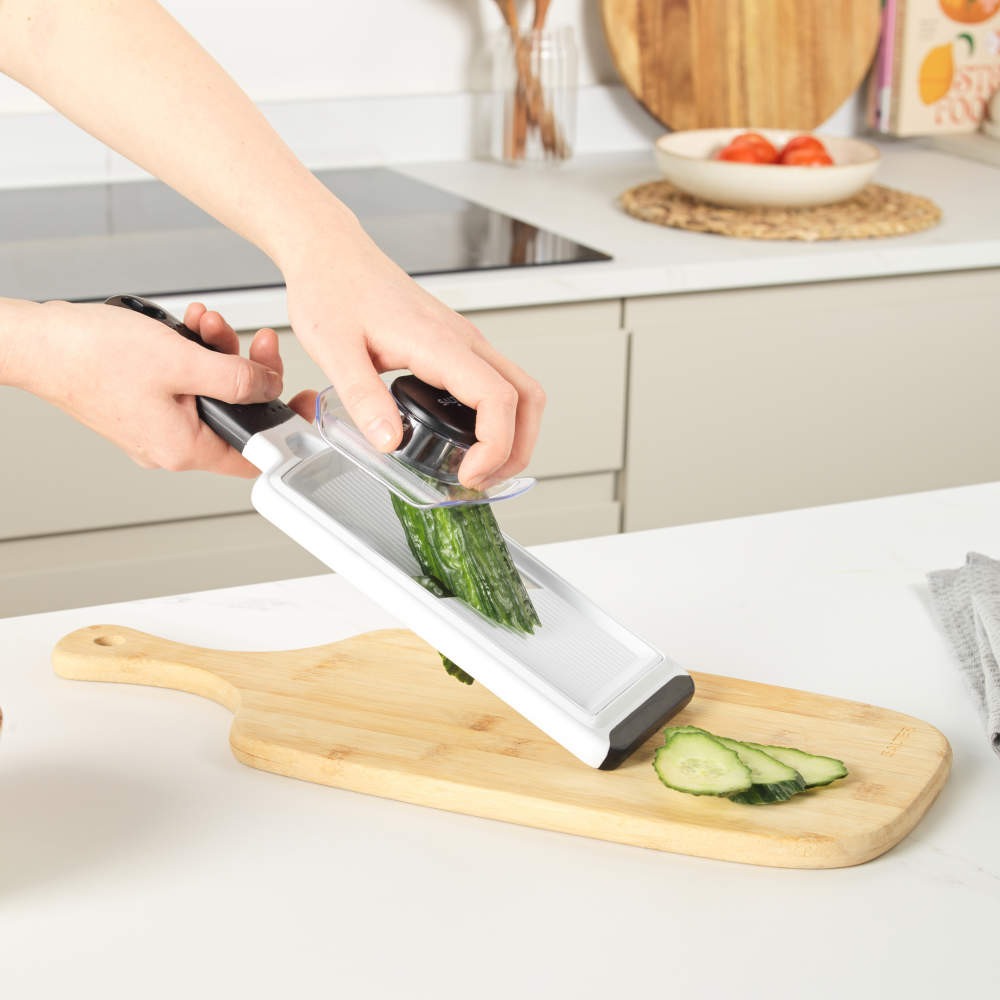
For straight slices, place the vegetable on the mandoline’s surface, engage the hand guard, and apply gentle, even pressure as you slide it down the blade. Use a smooth, continuous motion. For julienne cuts, insert the appropriate julienne blade, and again, use a steady motion. Practice with softer vegetables first to get a feel for the tool.
Safety First, Always
This cannot be stressed enough: always use the hand guard. It is your most important safety feature. Never attempt to slice food by hand without it, especially when getting close to the end of the vegetable. Keep your fingers well clear of the blade path. Work slowly and deliberately, especially when you are new to the tool. Clean the mandoline carefully, avoiding direct contact with the blades.
“As Chef Antoine Dubois always says, ‘A mandoline is an extension of your culinary vision, but respect its blade, and it will serve you faithfully.’ This isn’t just about technique; it’s about acknowledging the power and precision of the tool and treating it with caution.”
Beyond Basic Slices: Creative Cuts and Applications
The true magic of a French mandoline slicer lies in its ability to produce a diverse range of cuts that can transform your dishes.
Paper-Thin Perfection
Achieving translucent, paper-thin slices of vegetables like radishes, cucumbers, or potatoes is effortless. These delicate cuts are perfect for elegant carpaccios, light salads, delicate garnishes, or creating the foundational layers for a perfectly cooked gratin Dauphinois. The uniformity ensures even cooking and an exquisite presentation.
Flawless Julienne
For those coveted matchstick-thin strips of vegetables, a French mandoline with a julienne blade is a game-changer. Think of vibrant carrot and zucchini sticks for stir-fries, crisp potato frites, or elegant garnishes for soups and main courses. The consistent thickness ensures they cook evenly and look professional every time.
Wavy and Gaufrette Cuts
Many French mandoline slicers come with specialized blades for creating visually stunning wavy or gaufrette (waffle) cuts. These are fantastic for homemade potato chips, sweet potato fries, or even decorative vegetable platters, adding a playful and sophisticated touch to your culinary creations. The texture created by these cuts can also help sauces cling better to the food.
Dicing (with technique)
While a mandoline doesn’t dice directly, it can be an invaluable aid. By first slicing a vegetable into uniform planks, you can then stack those planks and cut them by hand into perfectly even dice. This two-step process leverages the mandoline’s precision to simplify the most tedious part of dicing, ensuring every cube is consistent.
The Unrivaled Benefits of Embracing a French Mandoline Slicer
Integrating a French mandoline slicer into your kitchen arsenal offers a multitude of advantages that go far beyond just cutting vegetables.
Unmatched Precision and Uniformity
This is arguably the greatest benefit. A mandoline allows you to achieve a consistent thickness that is nearly impossible to replicate by hand with a knife. This uniformity is crucial for even cooking, whether you’re frying chips, baking gratins, or blanching vegetables. It also dramatically improves the aesthetic appeal of your dishes, giving them a professional, restaurant-quality look.
Significant Time-Saving
Tedious chopping and slicing can eat up a considerable amount of prep time. A French mandoline slicer dramatically speeds up this process, allowing you to slice large quantities of vegetables in a fraction of the time it would take with a knife. This efficiency is invaluable, especially when cooking for a crowd or preparing complex meals.
Professional Results at Home
For home cooks aspiring to elevate their dishes, a mandoline is a secret weapon. It allows you to create garnishes, textures, and presentations that truly impress. From delicate radish slices to perfectly uniform potato chips, the results speak for themselves, transforming everyday meals into culinary experiences.
Maintaining Your Masterpiece: Care and Cleaning for Longevity
To ensure your French mandoline slicer remains a valuable kitchen asset for years to come, proper maintenance and cleaning are essential. Its sharpness and precision depend on it.
Immediate Cleaning
The best time to clean your mandoline is immediately after use. This prevents food particles from drying and sticking to the blades and surfaces, making cleanup much easier. A quick rinse under running water can often remove most debris.
Safe Washing
For thorough cleaning, handwashing is almost always recommended. Use a brush (a dedicated cleaning brush or even a sturdy dish brush) and dish soap to scrub away food residue, paying close attention to the blades. Never use your bare hands or a sponge directly on the cutting edges; the blades are incredibly sharp, even when wet. Disassemble any removable parts to clean all crevices effectively. Some components might be dishwasher safe, but always check the manufacturer’s instructions, as harsh dishwasher detergents can dull blades over time.
Blade Storage
Proper storage of the blades is critical for both safety and maintaining their sharpness. Many French mandoline slicers come with a dedicated storage case or slot for their interchangeable blades. Always store them securely to prevent accidental cuts and to protect the delicate edges from damage.
Long-Term Care
While high-quality stainless steel blades hold their edge well, they may eventually require sharpening. For fixed blades, professional sharpening might be an option. For removable blades, consult the manufacturer’s recommendations. Regular cleaning and careful handling will significantly extend the life and performance of your French mandoline slicer.
Frequently Asked Questions About French Mandoline Slicers
Thinking about adding a French mandoline slicer to your kitchen? Here are some common questions answered to help you make an informed decision.
Q1: What’s the main difference between a French and a Japanese mandoline slicer?
A French mandoline slicer typically features a heavy-duty, often all-stainless-steel construction with a fixed main blade and a platform that adjusts for thickness. Japanese mandolines are usually simpler, often made of plastic or a combination of plastic and steel, with a straight, ceramic or very sharp metal blade that excels at very thin, simple slices. French mandolines often offer more versatility in terms of cut types (wavy, waffle) due to interchangeable blade sets.
Q2: Are French mandoline slicers difficult to use for beginners?
While the initial thought of such a sharp tool can be intimidating, French mandoline slicers are not inherently difficult to use for beginners. The key is to prioritize safety by always using the hand guard and practicing with simple vegetables first. The robust build often makes them feel more stable and controlled than lighter models, which can be an advantage for novices.
Q3: How do I choose the best French mandoline slicer?
Look for models made from high-quality stainless steel for durability and stability. Consider the range of interchangeable blades offered and ensure they meet your culinary needs. Crucially, check the design of the hand guard for security and ease of use. Read reviews focusing on safety, ease of cleaning, and the precision of cuts.
Q4: Can I sharpen the blades of my French mandoline slicer?
For high-quality French mandoline slicers, the main fixed blade can often be professionally sharpened. Interchangeable blades, however, are usually not designed for sharpening and are typically replaced when they become dull. Always refer to your product’s manual for specific maintenance recommendations regarding blade sharpening or replacement.
Q5: What are the most common safety mistakes to avoid?
The most common safety mistakes include not using the hand guard, trying to slice food by hand when it gets too small for the guard, operating too quickly or carelessly, and improper cleaning of the blades. Always maintain a firm grip on the mandoline and the food, and focus your attention entirely on the task at hand.
Elevate Your Culinary Game with a French Mandoline Slicer
A French mandoline slicer is more than just a kitchen gadget; it’s a testament to timeless design, precision engineering, and the pursuit of culinary excellence. Investing in one means unlocking a new level of efficiency, uniformity, and aesthetic appeal in your cooking. From perfectly layered potato gratins to beautifully delicate garnishes, the possibilities are endless. Don’t let its sharp edges intimidate you; with respect and proper technique, this formidable tool will become an indispensable ally in your kitchen, transforming your food preparation and elevating your dishes to professional standards. So go ahead, embrace the power of the French mandoline slicer, and prepare to impress yourself and your guests with every perfectly sliced ingredient. Share your experiences, and let the precision revolution begin in your home kitchen!