Tired of unevenly chopped vegetables and the endless chore of dicing? Imagine effortlessly achieving restaurant-quality slices, juliennes, and even waffle cuts with precision and speed. A high-quality mandoline slicer is the secret weapon every home cook needs to transform mundane meal prep into an enjoyable, efficient, and impressive culinary experience. When it comes to finding the Best Mandoline Slicer, there’s a world of options, each promising to elevate your kitchen game. Let’s explore how this versatile tool can become your new favorite kitchen companion.
The Mandoline Slicer: A Culinary Game Changer
Mandoline slicers have a rich history, evolving from basic kitchen tools into sophisticated devices designed for consistency and efficiency. At its core, a mandoline slicer is a kitchen utensil used to slice food by pushing it along an adjustable blade. This simple mechanism allows for uniform cuts that are almost impossible to achieve with a chef’s knife alone. “You can’t cut that thin or regularly with a knife,” says Chef Cara Tannenbaum, assistant dean of students at the Institute of Culinary Education. “[A mandoline slicer] gives you regularity—everything’s exactly the same—and it’s a great thing to have if you’re an avid home cook.”
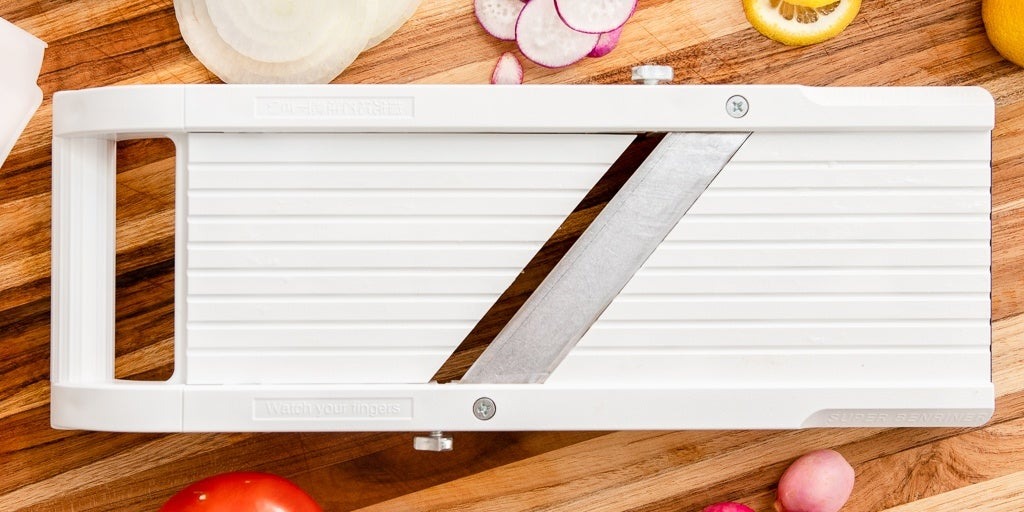
There are generally three main styles of mandoline slicers you’ll encounter:
- French Mandoline: These are typically larger, designed to sit on your countertop, often featuring a leg that angles the slicing surface. They boast one long, straight blade that runs across the entire width of the tool, offering exceptional precision for thickness settings. While robust and often used in culinary schools, their bulk and more complex setup can be intimidating for some home cooks.
- Japanese Mandoline: More compact and lightweight, Japanese mandolines are usually handheld. Their blade is set at a diagonal angle, which many professionals, like Chef Eric Gabrynowicz, Senior Vice President of Culinary and Beverage at Tupelo Honey Cafe, find to be quicker, easier, and more precise with practice. They are excellent for those with limited kitchen space and are generally more budget-friendly.
- V-Shaped Mandoline: Featuring a V-shaped blade with two distinct cutting surfaces, these mandolines excel at handling both firm and delicate foods with ease. The V-blade design helps guide the food, reducing tearing and ensuring even slices every time. They are often recommended for home cooks due to their user-friendliness, though their blades are typically non-interchangeable.
Choosing the best mandoline slicer often comes down to balancing stability, versatility, and ease of use, with safety being a paramount concern across all types.
|
Our Picks for the Best Mandoline Slicer in 2026
As an Amazon Associate I earn from qualifying purchases.
|
||
| Num | Product | Action |
|---|---|---|
| 1 | Mandoline Food Slicer, Adjustable Mandoline Slicer for Kitchen, Stainless Steel Mandolin Vegetable Chopper for Potato/Tomato/Onion, Vegetable Slicer Julienne Cutter with Cut-Resistant Gloves |

|
| 2 | Gramercy Adjustable Mandoline Food Slicer, Mandoline Slicer for Kitchen, Mandolin, Potato, Tomato, Carrot, Vegetable, Fruit and Onion Cutter - Stainless Steel - INCLUDING 1 Pair Cut-Resistant Gloves |
|
| 3 | Mueller Pro-Series All-in-One, 12 Blade Mandoline Slicer for Kitchen, Food Chopper, Vegetable Slicer and Spiralizer, Cutter, Dicer, Grater, Kitchen Gadgets Sets with Container, White Sand/Gray |
|
| 4 | OXO Good Grips Handheld Mandoline Slicer for Kitchen, Adjustable Vegetable Slicer |
|
| 5 | Cambom Mandoline Slicer Vegetable Slicer With 2 L Container for Potatoes, Tomatoes, Cucumbers, Carrots With 10 Blades White |
|
| 6 | Fullstar Mandoline Slicer for Kitchen, Fruit Cutter, Cheese Grater, Cucumber Slicer, Veggie Spiralizer, Food Cutter & Kitchen Gadgets & Gifts with Safety Glove (6 in 1, White) |
|
| 7 | VEKAYA Mandoline Slicer, Mandoline Slicer for Kitchen, Adjustable Mandolin, Stainless Steel Mandoline, Vegetable Slicer, Potato, Onion, Cucumber, Tomato, Veggie Slicer with Cut-Resistant Gloves |
|
| 8 | Ourokhome Safe Mandoline Vegetable Slicer with Guard, 6-Blade Adjustable Kitchen Slicer with Container for Cucumber, Potato Chips & Salad Prep(Gray) |
|
| 9 | Mandoline Slicer,Mandoline Food Slicer for Kitchen,Mandolin,Vegetable Chopper,Vegtable Slicer,Adjustable Stainless Steel Veggie Onion Tomato Julienne Cutter with Cut-1 Pair Cut-Resistant Gloves |
|
| 10 | 2 Pack 5 in 1 Mandoline Slicer for Kitchen, Vegetable Slicer Multi Blade Potato Chip, Veggie shredder, Vegetable Cutter, Julienne Shredder and peeler For Small Job In Kitchen |
|
Essential Features and Components of a Top Mandoline Slicer
To truly get the most out of your mandoline, understanding its key parts and what to look for is crucial:
- Adjustable Thickness Settings: This is arguably the most important feature. The ability to vary slice thickness, from paper-thin potato chips (1mm) to thicker gratin slices (6mm or more), is achieved via a dial, knob, or slider. Precise adjustability is what truly sets a good mandoline apart.
- Blade Types:
- Straight Blade: Common in French mandolines, ideal for firm vegetables.
- V-Blade: Found in many popular models like the OXO Good Grips V-Blade Mandoline Slicer, superior for slicing soft items like tomatoes without crushing them.
- Interchangeable Blades/Inserts: Many mandolines come with additional blades for specialty cuts, such as julienne, crinkle-cut, waffle-cut, and even dicing. Look for models where these blades are easily and safely swapped.
- Hand Guard/Food Holder: This is a non-negotiable safety feature. A food holder secures your ingredient and protects your fingers from the razor-sharp blade as you push the food across. Some mandolines, like the Dash Safe Slice, even use a gravity feeder mechanism to keep your hands completely away from the blade.
- Non-Slip Feet/Base: Stability is key for safety and consistent results. Whether handheld or a countertop model, a non-slip base ensures the mandoline stays firmly in place during use.
Mastering Your Mandoline: Safe and Effective Usage
Using a mandoline slicer can be incredibly rewarding, but it demands respect for its sharpness. Safety should always be your top priority.
The Preparation Process: Setting Up for Success
- Read the Manual: This cannot be stressed enough. Every mandoline has its unique features and safety warnings. Familiarize yourself with them.
- Ensure Stability: Place your mandoline on a clean, dry, non-slip surface, or secure it over a bowl if it’s a handheld model designed for that.
- Select Your Setting: Adjust the thickness and blade type according to your recipe.
- Prepare Your Produce: Wash and peel fruits or vegetables as needed. If using a mandoline with a chute, like the Dash Safe Slice, ensure your produce fits the opening—you might need to cut larger items in half.
Fundamental Slicing Techniques
- Always Use the Hand Guard: This is paramount. Position your food firmly within the hand guard or food holder.
- Maintain Consistent Pressure: Apply steady, even pressure as you glide the food over the blade. This ensures uniform slices.
- Use a Smooth Motion: Avoid jerky movements. A smooth, back-and-forth (or one-way, depending on the mandoline design) motion works best.
- Know When to Stop: As the food gets smaller, the risk increases. Never force the last bit of food through the blade without the hand guard. Some cooks opt for cut-resistant gloves for added protection, especially when using models like the Benriner Mandoline Super Slicer, known for its extreme sharpness.
Pro Tips for Optimal Safety
- Mind Your Fingers: Always be aware of where your non-dominant hand is, even when using the food guard.
- Clean Carefully: Blades are sharp even when not in use. Use a brush (often included) to dislodge stuck food and wash gently.
- Store Safely: Store your mandoline with blades protected, ideally in a drawer or cabinet where accidental contact is minimized. Many models offer blade covers or integrated storage for interchangeable blades.
Culinary Creativity: Innovative Cuts and Applications
The mandoline slicer is a wizard for transforming ingredients into visually stunning and texturally exciting forms.
- Paper-Thin Slices: Ideal for delicate carpaccios, elegant potato gratins, or incredibly crispy homemade potato chips. Chef Megan Dow of More Momma Cooking School notes, “Mandolines are definitely worth it when cutting items that need to be cut precisely and evenly. Especially for things like homemade potato chips where the thickness of the potato will determine cooking time.”
- Julienne Strips: Perfect for quick stir-fries, vibrant salads, coleslaws, or delicate garnishes. Many models, like the OXO Good Grips V-Blade Mandoline Slicer, offer julienne attachments.
- Wavy or Crinkle Cuts: Add a playful touch to roasted vegetables, pickles, or French fries.
- Dicing: Some advanced mandolines, such as the Dash Safe Slice, can even dice vegetables by combining slicing and a push mechanism.
Imagine making beautiful zucchini ribbons for a fresh salad, uniform cucumber slices for refreshing spa water, or perfectly consistent onions for French onion soup. The possibilities are truly endless, limited only by your imagination and the specific capabilities of your best mandoline slicer.
The Undeniable Benefits of a Mandoline Slicer
Investing in the best mandoline slicer for your needs offers a wealth of advantages in the kitchen:
- Time-Saving: Say goodbye to laborious hand-slicing. A mandoline makes quick work of large quantities of produce, drastically cutting down prep time.
- Unrivaled Uniformity: Achieve perfectly consistent slices, which not only looks professional but also ensures even cooking. No more half-raw, half-burnt potato slices!
- Enhanced Food Presentation: Uniform cuts elevate the aesthetic appeal of your dishes, making them look as good as they taste.
- Precision and Thinness: Produce slices so thin they’re almost translucent, a feat nearly impossible with a knife.
- Versatility: From simple slices to complex juliennes, many mandolines offer multiple cutting options.
Keeping Your Mandoline Slicer in Pristine Condition
Proper care and maintenance are vital for extending the lifespan of your best mandoline slicer and ensuring its continued performance.
Cleaning Your Mandoline Slicer
- Immediate Cleaning: Clean your mandoline immediately after use. This prevents food from drying onto blades and hard-to-reach crevices.
- Hand Washing vs. Dishwasher:
- Many plastic handheld mandolines are top-rack dishwasher safe, like the OXO Good Grips Handheld Mandoline Slicer.
- Larger, more complex models, especially those with multiple parts or stainless steel components, often require hand washing. The OXO Good Grips V-Blade Mandoline Slicer, for example, is hand wash only, and users have noted it can be tricky to reassemble after cleaning.
- Use a Brush: Always use a cleaning brush, often provided, to remove trapped food, rather than your fingers.
- Thorough Drying: Ensure all parts are completely dry before storing to prevent rust on metal blades and inhibit bacterial growth.
Blade Care and Longevity
- Handle Blades with Care: Store interchangeable blades in their designated safety containers or covers.
- Sharpening: Chef Donald Young, a Michelin-starred chef, suggests periodically sharpening the blade to maintain peak performance. Some ceramic blades, like those found in Kyocera models, are known for staying sharp longer and not rusting.
- Storage: Keep your mandoline in a safe place, protected from dust and damage. Many models feature fold-down legs or compact designs for easy storage.
The Verdict: Is a Mandoline Slicer Worth It?
In short, absolutely. For anyone serious about cooking, a mandoline slicer is a valuable asset in the kitchen. It brings consistency to your cooking, elevates presentation, and saves significant time on prep work. While professional-grade French mandolines are sturdy, many culinary experts, including Chef Eric Gabrynowicz and Chef Cara Tannenbaum, recommend Japanese-style mandolines for home cooks due to their ease of storage, affordability, and practical efficiency.
Finding the best mandoline slicer means considering your cooking style, storage space, and willingness to learn. Whether you opt for a versatile V-blade model, a compact handheld option, or a safety-focused design, the right mandoline will quickly become an indispensable tool. As culinary equipment specialist, Dr. Anya Sharma, advises, “Don’t shy away from these powerful tools. With a little practice and adherence to safety guidelines, a good mandoline can unlock a new level of precision and artistry in your home cooking.”
So, take the plunge, explore the options, and get ready to create stunning, uniform dishes that will impress both your palate and your guests!