Stepping into the world of culinary precision, a good mandoline slicer isn’t just another kitchen gadget; it’s a game-changer. Imagine effortlessly creating perfectly uniform slices for your potato gratin, delicate julienne for a vibrant stir-fry, or even paper-thin cucumber ribbons for an elegant salad. A mandoline slicer empowers home cooks and seasoned chefs alike to elevate their dishes with consistency and finesse that even the sharpest knife often can’t achieve. This guide will walk you through everything you need to know to choose, use, and maintain the ideal mandoline slicer for your kitchen.
|
Our Picks for the Best Mandoline Slicer in 2026
As an Amazon Associate I earn from qualifying purchases.
|
||
| Num | Product | Action |
|---|---|---|
| 1 | Mandoline Slicer,Mandoline Food Slicer for Kitchen,Mandolin,Vegetable Chopper,Vegtable Slicer,Adjustable Stainless Steel Veggie Onion Tomato Julienne Cutter with Cut-1 Pair Cut-Resistant Gloves |

|
| 2 | Mandoline Food Slicer, Adjustable Mandoline Slicer for Kitchen, Stainless Steel Mandolin Vegetable Chopper for Potato/Tomato/Onion, Vegetable Slicer Julienne Cutter with Cut-Resistant Gloves |
|
| 3 | Ourokhome Safe Mandoline Vegetable Slicer with Guard, 6-Blade Adjustable Kitchen Slicer with Container for Cucumber, Potato Chips & Salad Prep(Gray) |
|
| 4 | VEKAYA Mandoline Slicer, Mandoline Slicer for Kitchen, Adjustable Mandolin, Stainless Steel Mandoline, Vegetable Slicer, Potato, Onion, Cucumber, Tomato, Veggie Slicer with Cut-Resistant Gloves |
|
| 5 | Fullstar Mandoline Slicer for Kitchen, Fruit Cutter, Cheese Grater, Cucumber Slicer, Veggie Spiralizer, Food Cutter & Kitchen Gadgets & Gifts with Safety Glove (6 in 1, White) |
|
| 6 | OXO Good Grips Handheld Mandoline Slicer for Kitchen, Adjustable Vegetable Slicer |
|
| 7 | Cambom Mandoline Slicer Vegetable Slicer With 2 L Container for Potatoes, Tomatoes, Cucumbers, Carrots With 10 Blades White |
|
| 8 | 2 Pack 5 in 1 Mandoline Slicer for Kitchen, Vegetable Slicer Multi Blade Potato Chip, Veggie shredder, Vegetable Cutter, Julienne Shredder and peeler For Small Job In Kitchen |
|
| 9 | Mueller Pro-Series All-in-One, 12 Blade Mandoline Slicer for Kitchen, Food Chopper, Vegetable Slicer and Spiralizer, Cutter, Dicer, Grater, Kitchen Gadgets Sets with Container, White Sand/Gray |
|
| 10 | Gramercy Adjustable Mandoline Food Slicer, Mandoline Slicer for Kitchen, Mandolin, Potato, Tomato, Carrot, Vegetable, Fruit and Onion Cutter - Stainless Steel - INCLUDING 1 Pair Cut-Resistant Gloves |
|
What is a Mandoline Slicer and Why Do You Need One?
A mandoline slicer is a kitchen tool specifically designed to slice fruits and vegetables with unparalleled accuracy and uniformity. It typically features a sharp blade, a flat surface, and a mechanism to adjust slice thickness. While a good chef’s knife is indispensable, a mandoline excels when consistency and speed are paramount, transforming tedious chopping into a swift, professional-grade task.
Historically, mandolines have evolved from simple hand tools to sophisticated machines. Early versions were often rudimentary, but modern mandoline slicers boast advanced features and ergonomic designs, making them more accessible and safer for everyday use. From delicate garnishes to hearty root vegetable preparations, a mandoline slicer ensures every piece is the same size, promoting even cooking and a more appealing presentation.
Types of Mandoline Slicers: French, Japanese, and Beyond
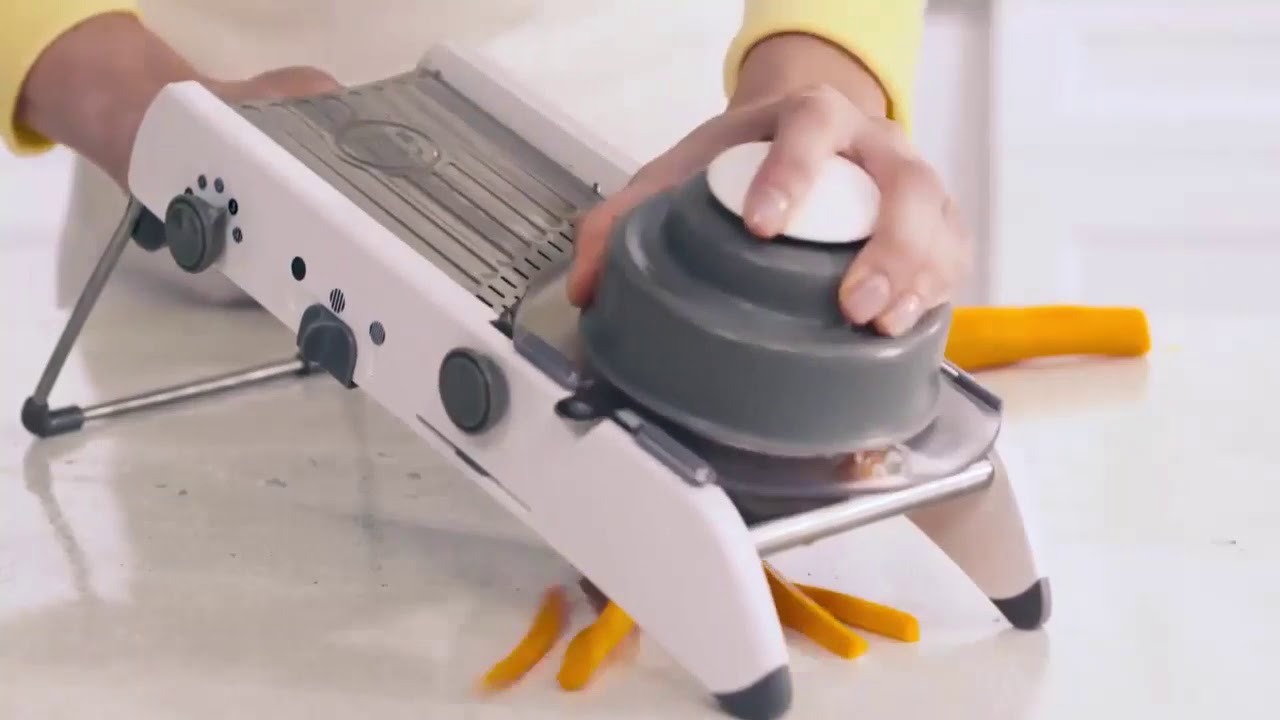
When you’re searching for a good mandoline slicer, you’ll encounter a few main styles, each with its own advantages:
- French Mandoline: These are typically larger, robust, and often made of stainless steel. They usually sit on your countertop with a leg that angles the slicing surface. While they offer precise thickness adjustments and are favored by culinary professionals for their stability and durability, they can be bulkier and might have a steeper learning curve for beginners. They are sometimes referred to as “guillotine-style” when they involve a pushing mechanism.
- Japanese Mandoline: Generally smaller, lighter, and often handheld, Japanese mandolines are known for their razor-sharp, diagonally angled blades, which provide excellent accuracy. Many professionals prefer them for their speed and ease of use, especially for thinner slices. They are a fantastic choice for home cooks due to their compact storage.
- V-Blade Mandoline: These mandolines feature a V-shaped blade with two separate cutting surfaces. This design reduces drag and makes it easier to slice even soft or delicate foods like tomatoes without mashing them. V-blades are often seen as a safer option for amateurs because the V-shape guides the food more effectively, and the blades are typically non-interchangeable but offer adjustable thickness.
- Handheld Mandoline: These are compact and designed to be held over a bowl or cutting board. They are ideal for smaller kitchens or for those who don’t use a mandoline frequently. They prioritize ease of storage and simplicity.
- Kickstand Mandoline: These models feature a built-in stand that props the slicer up on your counter, providing stability. Many offer adjustable angles and can often be collapsed for more compact storage.
Essential Features of a Good Mandoline Slicer
Choosing a good mandoline slicer means looking beyond the basic blade. Here are the key features that set exceptional models apart:
Adjustable Thickness Settings
A versatile mandoline offers a range of thickness settings, allowing you to customize your cuts from paper-thin to several millimeters thick. Look for models with an easy-to-use dial or lever for smooth adjustments. Some advanced mandolines, like the OXO Chef’s Mandoline Slicer 2.0, can offer up to 21 settings, increasing in half-millimeter increments for ultimate precision. Being able to control the thickness is crucial for different recipes, such as uniform potato chips that cook evenly or delicately shaved vegetables for a carpaccio.
Blade Types and Interchangeability
Beyond the main slicing blade, a good mandoline slicer often comes with interchangeable blades or integrated options for various cuts:
- Straight Blade: The most common for basic slicing.
- V-Blade: Excellent for reducing drag and cleanly cutting soft produce.
- Julienne Blades: For creating thin, matchstick-like strips, perfect for stir-fries or salads. These can vary in thickness.
- Crinkle or Wavy Blades: For decorative cuts, popular for homemade fries or garnishes.
- Dicing and Grating Options: Some multi-function mandolines include attachments for dicing or grating, expanding their utility.
Consider your primary cooking needs. If you primarily want uniform slices, a simple, sharp mandoline might suffice. If you’re a culinary enthusiast who loves experimenting with different textures, a model with multiple interchangeable blades will be a better investment.
Safety Features: Your Hands’ Best Friend
Mandoline slicers are renowned for their sharpness, making safety a top priority. A truly good mandoline slicer incorporates features to protect your fingers:
- Hand Guard/Food Holder: This is a non-negotiable accessory that comes with most mandolines. It’s a plastic claw-like device that grips the food, keeping your fingers away from the blade as you slice. Always use it, even if you’re tempted to slice the last small piece freehand.
- Non-Slip Base/Feet: Whether it’s a handheld model with rubberized feet or a standing model with sturdy, non-skid legs, stability is key to preventing slips and accidents on your countertop.
- Cut-Resistant Gloves: For an extra layer of protection, especially when handling awkward ingredients or when you’re nearing the end of a vegetable, investing in a pair of cut-resistant gloves is a smart move. They act as a shield for your hands against accidental contact with the blade.
- Blade Covers/Storage: When not in use, blades should be safely covered or stored to prevent accidental cuts during handling or storage.
How to Use Your Good Mandoline Slicer Safely and Effectively
Using a mandoline slicer doesn’t have to be intimidating. With the right technique and safety precautions, it can become one of your most efficient kitchen tools.
Preparation is Key
- Stable Surface: Always place your mandoline on a flat, stable, non-slip surface. If it has a kickstand, ensure it’s fully extended and steady.
- Food Prep: If your ingredient doesn’t have a flat surface (like a round potato), make an initial cut with a knife to create a stable base. This prevents wobbling and ensures even slices from the start.
- Choose Your Setting: Adjust the thickness setting and select the desired blade (if interchangeable) before you begin slicing.
Basic Slicing Technique
- Use the Hand Guard: This is paramount. Secure your food firmly with the hand guard. It will grip the food and act as a barrier between your fingers and the blade.
- Even Pressure: Apply gentle, consistent pressure as you glide the food over the blade. Don’t press too hard, as this can cause the food to slip or the blade to resist, increasing the risk of injury. A sharp blade requires minimal force.
- Controlled Motion: Move the food in a steady, even motion. Avoid rushing. Slow and steady wins the race when it comes to precision and safety with a mandoline.
- Know When to Stop: As you get to the very end of a fruit or vegetable, where the hand guard can no longer effectively grip it, don’t be a hero. Discard the last small piece or finish cutting it with a knife. Attempting to slice the last sliver without proper protection is a common cause of injury.
Expert Tip from Chef Laurent Dubois
“Many aspiring home chefs shy away from mandoline slicers, fearing their sharpness,” says Chef Laurent Dubois, a renowned culinary expert with over 20 years in professional kitchens. “But with proper technique and the essential safety guard, a good mandoline slicer becomes an extension of your culinary artistry. The consistency it brings to ingredients not only elevates the visual appeal of your dishes but also guarantees even cooking, a hallmark of true expertise.”
Creative Cuts and Applications
A good mandoline slicer opens up a world of culinary possibilities beyond simple slices.
- Paper-Thin Slices: Perfect for potato chips, delicate carpaccios of beets or radishes, or translucent cucumber for a refreshing salad.
- Julienne Strips: Ideal for stir-fries, spring rolls, or vibrant garnishes for soups and main courses. Think carrots, zucchini, or bell peppers transformed into elegant matchsticks.
- Crinkle/Wavy Cuts: Add a fun, decorative touch to homemade fries, carrot sticks, or even pickle slices.
- Gaufrette (Waffle) Cuts: Achieve intricate waffle-patterned potato chips or vegetable crisps by rotating the vegetable 90 degrees between two crinkle cuts.
- Gratins and Dauphinoise: Achieve perfectly uniform potato or vegetable slices for rich, layered gratins that cook evenly and present beautifully.
Benefits of Integrating a Mandoline Slicer into Your Kitchen
Beyond the sheer joy of creating professional-looking dishes, a good mandoline slicer offers practical benefits that streamline your cooking process:
- Time Savings: It significantly reduces prep time for tasks like slicing large quantities of vegetables.
- Uniformity: Every slice is consistently the same thickness, ensuring even cooking and a beautiful presentation. This is particularly important for dishes where consistency affects texture, like potato gratin or homemade chips.
- Enhanced Aesthetics: Uniform cuts elevate the visual appeal of your meals, making everyday dishes feel gourmet.
- Reduced Effort: With a sharp blade, a mandoline requires less physical effort than repetitive knife work, especially for firm vegetables.
Maintenance and Care for Your Good Mandoline Slicer
To ensure your mandoline slicer remains a reliable kitchen companion for years, proper care is essential:
- Immediate Cleaning: Clean your mandoline immediately after use. Food particles can dry and become difficult to remove, especially around blades and in crevices.
- Hand Washing Recommended: While some plastic models might be top-rack dishwasher safe, hand washing is generally recommended to preserve blade sharpness and prevent damage. Use a brush to safely remove food debris from around the blades. Never wipe the blade directly with your bare hand.
- Thorough Drying: Dry all parts completely before storing to prevent rust, especially on stainless steel blades.
- Safe Storage: Store your mandoline slicer in a safe place, ideally with blade covers on, to prevent accidental cuts and protect the blades from dulling or damage. Many models fold flat or have compact designs for easy drawer storage.
- Blade Sharpening (If Applicable): If your mandoline has removable and sharpenable blades, periodic sharpening will maintain its efficiency and safety. Dull blades require more force, increasing the risk of slips.
Frequently Asked Questions about Good Mandoline Slicers
Q: Are mandoline slicers truly safe to use?
A: Yes, mandoline slicers are safe when used correctly and with caution. Always use the provided hand guard or a cut-resistant glove to protect your fingers from the extremely sharp blades. Taking your time and maintaining a stable grip are also crucial for safety.
Q: Can a mandoline slicer replace all my knives?
A: No, a mandoline slicer is a specialized tool that excels at uniform slicing. It doesn’t replace the versatility of a good chef’s knife for tasks like dicing, chopping, mincing, or breaking down larger ingredients. However, it significantly complements your knife collection.
Q: What’s the difference between a V-blade and a straight blade mandoline?
A: A V-blade mandoline has a V-shaped blade that slices from two angles, reducing drag and making it easier to cut softer foods without tearing. A straight blade cuts across the entire width of the food in one pass. Both are effective, but V-blades are often favored for delicate produce and for beginners due to their guided action.
Q: How do I adjust the thickness on a mandoline slicer?
A: Most mandoline slicers feature a dial, lever, or interchangeable inserts to adjust the slicing thickness. Refer to your specific model’s instructions for the precise mechanism. Some advanced models offer very fine increments for ultimate control.
Q: Is a more expensive mandoline always better?
A: Not necessarily. While professional-grade mandolines (often stainless steel) are very durable and precise, there are many excellent and affordable options that are perfectly suited for home cooks. The “best” mandoline depends on your budget, frequency of use, desired features, and comfort level. Often, Japanese handheld models offer great value and performance.
Conclusion
Choosing a good mandoline slicer is an investment in culinary efficiency and precision. By understanding the different types, essential features, and most importantly, practicing safe and effective techniques, you’ll unlock a new level of creativity and consistency in your kitchen. From perfect potato chips to elegant garnishes, a mandoline slicer will quickly become an indispensable tool, allowing you to optimize your cooking experience and impress with every dish. So go ahead, explore the options, and find the good mandoline slicer that’s just right for you and your culinary adventures!